




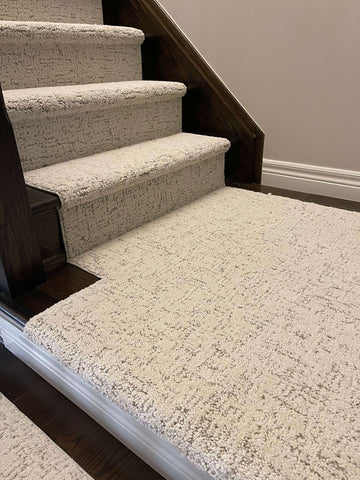
Stair runners are much more than a decorative feature. They offer a critical safety element in any multi-level home. A well-chosen runner protects your beautiful hardwood or tile stairs from daily wear and tear. More importantly, it provides essential traction to prevent dangerous slips, making your stairs safer for children, the elderly, and pets. Getting the right combination of style, material, and secure installation is the secret to a perfect stair runner.
Choosing for Grip and Durability
The material of your stair runner is the most significant factor influencing its longevity, comfort, and, crucially, its grip. Given the intense, focused traffic on stairs, you need a fibre that is tough, resilient, and won’t compress quickly. Low-pile, dense materials are generally better than high-pile, fluffy options because they offer a more stable footing.
The Best Fibres for High-Traffic Stairs
The fibre composition directly impacts how well the runner handles foot traffic and resists flattening over time. Two main categories dominate the market – resilient natural fibres and hard-wearing synthetics.
- Wool – Renowned as the gold standard, wool offers superior resilience and a luxurious feel. Its natural lanolin coating provides moderate stain resistance, and the fibre springs back well, resisting compression from constant foot traffic. Although wool runners are generally the most expensive upfront, their exceptional durability often makes them a worthwhile long-term investment.
- Nylon – This is the undisputed champion of synthetic fibres for high-traffic areas. A good quality nylon runner is exceptionally durable, resistant to abrasion, and maintains colour well without fading. Modern nylon can also be surprisingly soft underfoot, combining practicality with comfort for busy family homes.
- Wool-Nylon Blends – For those seeking a balance, an 80% wool and 20% nylon blend is often recommended by flooring experts. This mix provides the elegance and resilience of wool with the added strength and stain-fighting power of the synthetic fibre. This blend gives you the best of both worlds without the premium price of 100% pure wool.
- Sisal and Jute – These plant-based fibres offer a beautiful, organic texture and are highly durable. They are excellent for a textured, natural, or coastal aesthetic but can be rougher underfoot and are generally not as resistant to moisture and stains as wool or nylon.
Construction and Pile Height
The way the carpet is woven and the height of the pile significantly affect grip and stability. A low, dense pile is always safer than a long, loose pile.
- Loop Pile (e.g., Berber) – This construction is highly durable because the fibres are looped and not cut, making them less prone to fraying and crushing. The tight, low loops provide a stable, firm surface that is highly resistant to wear on stair noses.
- Cut Pile – While softer, a cut pile must be dense and low to be suitable for stairs, otherwise the fibres will flatten quickly, reducing grip. Look for runners explicitly rated for stair use, which indicates a high-density, low-profile product.
- Flatweave – These runners, often used with natural fibres like sisal, are woven tightly with a minimal pile height. They offer an excellent structured grip and maintain their appearance well over years of use, making them a very safe choice.
Style and Installation that Stand Out
A stair runner is a prime opportunity to inject personality and colour into a home’s entrance. Because it’s a smaller, transitional area, you can afford to be bolder with your choice than in a large living room.
Pattern and Colour Psychology
Patterns are not just for aesthetics; they are brilliant at hiding the inevitable wear, tear, and small spills that happen on stairs.
- Stripes and Geometrics – Stripes, particularly those running vertically, are a classic choice that can make a staircase appear longer and more elegant. Geometric or bold patterns work well in modern or eclectic interiors, effectively disguising dirt and footprints.
- Neutrals and Textures – For a quieter, more timeless look, consider neutral colours like charcoal, beige, or grey with subtle, tonal variations in texture. This understated approach allows the architecture of the staircase or surrounding artwork to take centre stage.
- Finishing Touches – Consider the edge of the runner. Options include simple binding, or going for a contrasting coloured tape, cord, or even leather trim for a fully custom, bespoke feel. Stair rods, which sit decoratively at the back of each tread, are an elegant optional extra that adds a classic touch.
Installation Methods for Safety
The key to a non-slip runner is professional, secure installation. There are two main methods, but the use of a high-quality underlay is essential for both.
- Waterfall – The carpet flows over the edge of the stair nose and then straight down the riser to the next tread. This creates a soft, continuous cascading effect and is the quicker and slightly simpler installation.
- Hollywood (or French Cap) – The carpet is stapled tightly right underneath the nose of the stair tread before it runs down the riser. This method involves more labour but creates a much more tailored, crisper edge that fully outlines the shape of the tread. The tight fit offers superior security and a premium look.
The Aussie Cost and Custom Approach
In Australia, especially in markets like Sydney’s Inner West or Stanmore, you can easily source everything from budget-friendly options to fully custom, architecturally designed custom stair runners Stanmore residents might prefer. When budgeting, you must consider the material cost, the finishing of the edges, and the labour for installation.
Custom Stair Runner Cost Australia
The price of a custom stair runner cost Australia wide depends heavily on your chosen material and the complexity of your staircase. Expect to pay a rate per linear metre for the runner, plus the cost of binding and installation.
- Runner Material Cost – Basic synthetic runners can start from as low as $30 to $50 per linear metre. High-end wool or custom-patterned runners can cost anywhere from $95 to over $150 per linear metre.
- Binding/Finishing – Adding a finished edge or trim to the runner will incur an extra charge per lineal metre, which is essential to prevent fraying and give a professional finish.
- Installation Labour – Professional installation in a metropolitan area like Sydney can run from $35 to $50 per step for a straight staircase. Stairs with pie-shaped steps, curves, or landings require more skill, material, and time, significantly increasing the final labour cost.
DIY vs. Professional Installation
While a how to install a stair runner DIY video might make it look simple, achieving a tight, wrinkle-free, and safe finish is challenging. A properly installed runner needs to be stapled or tacked securely at the base of the riser and under the nose of the tread, ensuring absolutely no movement.
- For safety and a professional finish, especially on expensive wool or custom runners, professional installation is strongly recommended.
- A professional will also manage the pattern alignment and the precise cuts required for landings and turns, which can be the trickiest part of the job.
The right stair runner not only adds a warm, inviting feel to your home but is also a critical investment in household safety. By choosing a dense, durable material and ensuring a secure, tight installation, you create a stunning feature that provides solid grip for many years to come.
