




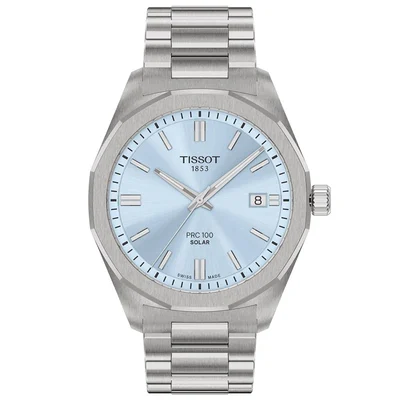
The Swiss watchmaking industry has always been considered the gold standard of the horological sphere. Tissot and Longines are two of the brands that have come to be viewed as a source of quality, heritage, and value, among the many great names that have come out of Switzerland. Both firms are over 100 years old, both belong to the Swatch Group, and both appeal to consumers who want to experience true Swiss-made products without necessarily being pushed into the high-end market.
For both first-time buyers and experienced enthusiasts, the decision between Tissot watches and Longines watches may be difficult. Although the brands have similarities in terms of focusing on quality and precision, they are in various market positions and attract different classes of customers. Tissot and Longines have different priorities in their values of accessibility, innovation, and everyday versatility, and refinement, heritage, and a higher luxury experience.
Whether you are attempting to figure out which brand of Swiss watches would be closest to your budget and your personal style, being familiar with the existence of Tissot versus Longines can enable you to make a secure choice.
The Heritage Behind Tissot and Longines
The histories of both brands are impressive and are a significant part of their reputations.
Tissot Company is based in Le Locle, Switzerland, and was started in 1853. Throughout its history, the company has been oriented toward ensuring Swiss watchmaking is available to a wider audience. The brand has produced many innovations such as anti-magnetic watches, tactile technology, and sophisticated automatic movements. Currently, Tissot watches are characterized by providing great value and at the same time, upholding standards of Swiss manufacturing.
Longines has a much older history, dating back to 1832, in Saint-Imier, Switzerland. During decades, the company established a reputation of high accuracy of timekeeping and was closely related to the world of aviation, equestrian sports, and global competitions. Longines watches have had a more upmarket position in the Swiss watchmaking industry with its focus on style and sophistication.
Both brands have an outstanding history, yet Longines tends to put forward the image of a more luxurious brand as compared to Tissot, which is more versatile and affordable.
Understanding Their Market Position
Market positioning of the two brands is one of the most significant differences.
Tissot is said to be the gateway to Swiss luxury watchmaking. The company has various models that can attract first-time buyers, young professionals, and enthusiasts who need reliable mechanical watches without having to commit a lot of money.
Longines takes a superior position in the Swiss watch market. Although the brand is still relatively affordable in comparison to most of the luxury brands, Longines watches are typically both more refined in their finishing, possess superior movements, and are more focused on traditional elegance.
This placement implies that budget is a major factor during the decision-making process for the two brands.
Design Philosophy: Sporty Versus Refined
One of the simplest methods to differentiate Tissot and Longines is by design.
Tissot adopts a wide variety of styles. The brand manufactures sports watches, dress watches, chronographs, divers, and modern integrated-bracelet watches. Products like the PRX have gained popularity, especially because of their modernity and versatility.
Longines tends to concentrate on classic beauty. Even its sportier lines are likely to have elegant proportions and elegant detailing. Many Longines watches resemble classic designs, as the designs of the brand are regularly inspired by historical models.
| Design Category | Tissot | Longines |
| Overall Style | Modern and versatile | Elegant and refined |
| Sports Watch Focus | Strong | Moderate |
| Heritage Inspiration | Present | Very strong |
| Dress Watch Options | Good selection | Extensive selection |
| Contemporary Appeal | High | Balanced with tradition |
Tissot can be more attractive to you if your fashion is more inclined to modern sports watches and versatility. Longines tends to win the day, should you lean towards a low-key style.
Tissot Watches: Outstanding Value for Everyday Wear
The outstanding value proposition is one reason why Tissot watches will always be popular. Customers get quality Swiss craftsmanship, quality movements, beautiful designs, and good construction at reasonable prices.
The Tissot PRX has turned out to be a shining beacon of this philosophy. Its built-in bracelet, retro style, and automatic functionality have seen it become one of the most demanded Swiss watches in recent years.
Other ranges like Seastar, Gentleman and Le Locle have alternative styles that meet different lifestyles and preferences.
Tissot is the perfect combination of quality and cost to many purchasers, which is especially appealing as a first Swiss watch.
Why Tissot Watches for Men Remain Popular
Men’s Tissot watches will keep increasing in demand, as the brand has a solution for almost all occasions.
The Gentleman collection, with its clean and versatile look, is valued by professionals. The reason why sports enthusiasts tend to use the Seastar is connected with its water resistance and durability. The PRX fits the wants of people who need a more modern luxury-inspired look, but not a luxury price tag.
This selection enables men to discover a Tissot that fits their own style and lifestyle. Whether at the office, during travel, or on weekends, most Tissot watches easily move between the various settings.
The fact that they are both practical and stylish also helps them to remain popular.
Longines Watches: A Step Closer to Luxury
Even though Tissot pays more attention to accessibility, the emphasis of Longines watches is more on refinement and prestige.
Severe designs of the case, elaborate details of the dial, and quality of finishing are very common in the collections of the brand. The Master, Spirit, and Flagship models show that Longines is trying to make its mark in the watchmaking industry by incorporating the past with the present.
Movement technology is another area in which Longines is investing a lot. Most of the models come with advanced automatic calibers and considerably longer power storage and increased magnetic field resistance.
This attention to detail assists in justifying the higher positioning of the brand and adding to its image as one of the strongest values in Swiss luxury watchmaking.
Comparing Movement Technology
The most important thing in every watch is the movement, and the two brands are both impressive.
Tissot offers some of the best Swiss automatic and quartz movements that offer high performance and value. Most models have Powermatic 80 movements, providing about 80 hours of power capacity–impressive in this price bracket.
Longines is employing cutting-edge automatic movements that have been specifically designed to suit the brand. These calibers are usually fitted with silicon balance springs and other innovations that enhance long-term accuracy and reliability.
Although the two brands are equally good in terms of performance, Longines tends to make superior movement specifications in its pricier lines.
Everyday Comfort and Wearability
The watch that a person will use in their daily life must be comfortable to wear for long periods, and both brands do not lack in this aspect.
Tissot tends to focus on versatility and practicality. Most of the models have ergonomic designs, easy-to-carry case sizes, and bracelets designed to be comfortable to wear on a daily basis.
Longines also puts a lot of focus on wearability, but tends to be more comfortable as well as luxurious. Finishing, bracelet integration, and general refinement often result in an even finer wearing experience.
Both brands do not have issues in this category, but Longines can be a bit more luxurious on the wrist, and Tissot can be incredibly comfortable in comparison with its price.
Which Brand Offers Better Style Versatility?
The issue of versatility is one of the key factors that buyers take into account when they want to have one watch that will serve in various cases.
Here, Tissot does an excellent job. The PRX and Gentleman collections are versatile and can be used in the workplace and in everyday life.
Longines is also versatile, especially with such collections as Spirit and Conquest. Very few of the Longines models, however, are as weighted towards elegance as they can be, which again might suit or not suit your lifestyle.
To the buyers who desire the utmost flexibility of a single watch, Tissot tends to offer a little edge.
Value for Money: The Key Decision Factor
What comes up is a question of value, which often makes the difference in the decision between these two brands.
Tissot has been known to provide Swiss quality at affordable prices. Buyers are getting powerful specifications, beautiful designs, and reliable performance at a cost that does not leave them with a tight budget.
Longines is more expensive, but it gives its purchasers better finishing, superior luxury positioning, and superior movement technology.
Both brands are not a bad deal. Rather, it boils down to what level of refinement, heritage, and luxury prestige matters to you versus affordability.
Which Brand Is Better for First-Time Buyers?
For people who are buying their first Swiss watch, Tissot is a much safer bet.
The reduced entry price enables the customer to enjoy Swiss craftsmanship without having a significant financial obligation. PRX and Gentleman models have gained popularity with new entrants in the watchmaking business.
Longines can be of greater interest to consumers who will invest some extra money in achieving a more luxurious ownership experience right at the start.
Both ways are good, and Tissot tends to introduce the world of Swiss watches in a softer manner.
Long-Term Ownership Experience
A watch must not be looked at just at the point of purchase but also in its years of ownership.
Tissot and Longines are both winners of good service networks, reliability, and long experience in the industry. Well-kept watches of either brand can be used to offer decades of reliable service.
Longines can potentially have a better appeal of owning luxury as the positioning is higher, and Tissot presents a value of usefulness and accessibility.
The most suitable long-term decision is usually the one that corresponds to your personal preferences and life.
Which Swiss Brand Fits Your Budget and Style?
Select Tissot watches when you want to consider affordable, versatile, contemporary design, and good overall prices. The brand has one of the most powerful alternatives that buyers have when venturing into the Swiss watch market.
Select Longines watches when you like elegant refinement, greater luxury, more advanced movement technology, and design-oriented tradition.
When it comes to a budget, Tissot is usually the better option. Longines would be even more appealing if you are willing to pay a higher price in order to experience it at a more premium level.
Conclusion
The comparison between Tissot watches, Tissot watches for men, and Longines watches highlights two outstanding Swiss brands that serve different segments of the market.
Through innovation, accessibility, and outstanding value, Tissot has gained its reputation. It sells an extensive selection of multi-purpose watches that are attractive to professionals, enthusiasts and beginners. Longines has a higher-end position, focusing on sophistication, tradition and high-quality workmanship. Its collections give it a greater luxury experience but are affordable relative to most other luxury Swiss brands.
There is no universal superiority of one brand over the other. Rather, they are both experts in different areas. Tissot can be your ideal choice in case you care about affordability and versatility. Longines could be a superior option in case you want more refinement and more luxury.
It is the watch that can express your personality and that suits your lifestyle, gives you long-lasting pleasure every time you put it on: that is the ideal watch.
