




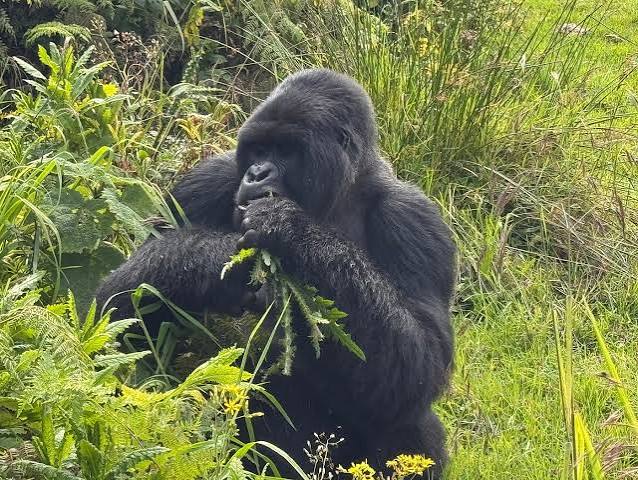
Few wildlife encounters compare with sitting an arm’s length from a wild mountain gorilla. Only about 1,000 of these animals survive, and the best places to see them are the misty volcanic forests of Rwanda and Uganda. This guide covers how gorilla safaris in Rwanda and Uganda work, what it costs, and how to do it by car. That includes car hire and self-drive safaris, car rental with camping, and cross-border safaris between Uganda and Rwanda.
Gorilla Safaris in Rwanda: Volcanoes National Park
Gorilla safaris in Rwanda are compact, polished and easy to reach. Volcanoes National Park sits in the Virunga massif near Musanze, roughly two to two and a half hours by road from Kigali on a smooth, paved route. That makes it possible to trek on a short itinerary of two or three days.
Rwanda runs gorilla tourism as a premium, low-volume product. A Rwanda gorilla permit costs USD 1,500 per person, set by the Rwanda Development Board. Some operators also mention a multi-park discount, but check the current terms with the Rwanda Development Board before you plan around it.
What you get for the price:
- Well-organised logistics. Treks start at the Kinigi park headquarters, with a morning briefing and family assignments.
- Famous gorilla families. Dian Fossey’s research legacy lives on in the Karisoke area, and you can combine trekking with a hike to her old camp.
- Easy add-ons. Golden monkey tracking, the Musanze caves, Lake Ruhondo and Lake Burera are all close by.
- Short trek times. Hikes vary from under an hour to several hours, depending on where the family moved overnight.
Rwanda suits travellers short on time, first-time visitors who want things simple, and anyone combining gorillas with Nyungwe Forest, Akagera National Park or Kigali.
Bwindi Gorilla Trekking in Uganda
Bwindi gorilla trekking is the other half of the story, and for many travellers the more adventurous one. Bwindi Impenetrable National Park in south-western Uganda is a UNESCO World Heritage Site and shelters about half the world’s mountain gorillas. The forest is ancient, dense and steep, which is why the name “Impenetrable” fits.
Bwindi has four trekking sectors, each with its own gorilla families and feel:
- Buhoma (north): the original sector, with a strong lodge and community scene.
- Ruhija (east): good for birdwatchers, with many Albertine Rift endemics.
- Rushaga (south): the largest number of habituated families, and the home of the habituation experience.
- Nkuringo (south-west): dramatic hillside views and some demanding treks.
Uganda is usually cheaper than Rwanda. A Uganda gorilla permit costs USD 800 per person, or USD 600 in low season, for Bwindi and Mgahinga. Be aware that Uganda’s tariff has been in flux. UWA’s newer published tariff material shows a US700 foreign non-resident gorilla permit, while the older 2024–June 2026 tariff listed US800. Confirm the figure with the Uganda Wildlife Authority or a licensed operator before paying.
Uganda also offers a gorilla habituation experience that Rwanda doesn’t. It costs $1,500 and gives you four hours instead of one, in the Rushaga sector. It is a good choice for photographers and anyone who wants unhurried time with a family still being accustomed to humans.
Mgahinga Gorilla National Park, in the far south-west, offers a third Ugandan option, with golden monkeys and volcano hikes on the same border region as Rwanda’s Volcanoes.
Rwanda vs Uganda: Which Gorilla Safari Is Right for You?
| Rwanda Uganda | ||
| Permit | About $1,500 | About $700–800 (check the current tariff) |
| Access | Short, paved drive from Kigali | Longer, rougher drives to Bwindi |
| Terrain | Steep volcanic slopes, often quicker | Dense, hilly forest, sometimes longer treks |
| Extras | Golden monkeys, Nyungwe, Akagera | Chimp tracking, Queen Elizabeth, Murchison Falls |
| Best for | Short trips, comfort, simplicity | Budget, variety, longer road journeys |
Both countries limit visitors to one hour with the gorillas, and the minimum age to trek is 15 in both Uganda and Rwanda. Gorillas can be seen year-round. The drier months of June to September and December to February make for easier hiking, but the forest is rewarding in any season.
Self-Drive Gorilla Safaris: Is It Realistic?
Yes, with some planning. Car hire and self-drive safaris are well suited to travellers who value independence, want to stop for photos, and don’t mind navigating. Drivers should know several important differences first.
Uganda drives on the left, Rwanda on the right. On a cross-border trip you’ll switch sides at the border. This catches many people out, so take the first kilometres slowly.
Choose the right vehicle. A high-clearance 4×4 such as a Toyota RAV4, Land Cruiser Prado or Land Cruiser is strongly recommended for Bwindi, especially in the wet season, when southern routes can be slick, steep and muddy. In Rwanda, a standard SUV copes well with paved roads, but a 4×4 gives you more flexibility.
Allow generous travel times. Kampala to Bwindi can take 8 to 10 hours depending on the route and stops. Splitting it with an overnight stop in Mbarara or at Lake Mburo breaks up the journey. Kigali to Musanze is far easier.
Fuel, navigation and night driving. Fill up in major towns before heading into remote areas. Download offline maps, since signal fades in the hills. Avoid driving after dark, as livestock, pedestrians and cyclists share the road.
Consider a driver-guide. If self-driving feels daunting, a hired driver-guide combines the freedom of a road trip with local knowledge. Many travellers self-drive in Rwanda and use a driver in Uganda’s remote southwest.
Car Rental and Camping: Budget-Friendly Self-Drive Options
Car rental and camping packages are popular with adventurous travellers, and they stretch your budget considerably when your main cost is the gorilla permit. In Uganda, several local operators offer 4×4 vehicles equipped with rooftop tents, camping chairs, a stove, bedding, a cooler and cooking gear. This setup gives you flexibility to stay at campsites in or near national parks.
Practical tips for camping on a gorilla road trip:
- Book campsites ahead near Bwindi and Mgahinga during peak months (June to September and December to January), since options near the trailheads are limited.
- Pack for cold nights. Highland evenings near Bwindi, Kisoro and Musanze can be chilly and wet, so bring warm layers and waterproofs.
- Plan around trek times. Gorilla trekking briefings start early, usually around 7:30 to 8:00 am, so camp as close to your assigned sector as possible.
- Mix camping with lodges. Many travellers camp for most of the trip and treat themselves to a lodge or guesthouse the night before the trek, for a hot shower and proper rest.
- Keep valuables secure. Use campsites that are fenced or staffed, and never leave gear visible in the vehicle.
Rwanda has a smaller camping rental scene, so many travellers rent their camping vehicle in Uganda and cross the border, if the rental company allows it (see below).
Cross-Border Safaris: Uganda and Rwanda in One Trip
Cross-border safaris between Uganda and Rwanda are one of the best-value ways to see East Africa. The two countries sit side by side, and a single trip can include gorillas in both, Bwindi and Volcanoes, or one trek plus chimps, big game and lakes.
Typical cross-border routes:
- Kampala → Bwindi → Musanze → Kigali. Drive south-west through Uganda, trek in Bwindi, cross at Cyanika near Kisoro, and finish in Rwanda.
- Entebbe → Queen Elizabeth NP → Bwindi → Lake Bunyonyi → Kigali. A classic wildlife-and-gorilla combination.
- Kigali → Volcanoes → Lake Bunyonyi → Bwindi → Kampala. The same loop in reverse.
Main border crossings include Katuna/Gatuna, on the main Kampala–Kigali road, and Cyanika, in the south-west near the Virunga region. Choose the crossing that fits your route.
What to organise before crossing:
- Visas. The East Africa Tourist Visa costs $100 and covers Uganda, Rwanda and Kenya, while a Uganda e-visa costs $50. Rules and fees change, so check with the immigration authorities before you travel.
- Vehicle permission. If you’re driving a rental, ask the company in writing whether it permits border crossings, and what paperwork, insurance and fees apply. Many companies restrict this or require advance notice.
- Vehicle documents. Carry the registration, rental agreement, a letter of authority from the owner, and valid insurance for each country.
- Health requirements. Check current yellow fever and other entry requirements for both countries.
- Border timing. Cross in daylight and allow extra time, especially on weekends and holidays.
A practical alternative is to drive one country, leave the car at the border or return it, and take a pre-arranged transfer on the other side. It adds cost but avoids cross-border paperwork.
Sample 8-Day Gorilla Safari Itinerary: Uganda to Rwanda
- Day 1: Arrive in Entebbe, pick up your 4×4 and overnight near the airport.
- Day 2: Drive to Lake Mburo or Mbarara.
- Day 3: Continue to Bwindi (Rushaga or Buhoma sector).
- Day 4: Gorilla trekking in Bwindi, then rest.
- Day 5: Drive to Lake Bunyonyi for canoeing and relaxing.
- Day 6: Cross the border at Cyanika, and drive to Musanze.
- Day 7: Second gorilla trek or golden monkey tracking in Volcanoes National Park.
- Day 8: Drive to Kigali and depart.
Responsible Gorilla Trekking: Rules That Protect the Animals
Gorillas are vulnerable to human illnesses, so rules are strict and exist for their protection:
- Stay about 7 metres from the gorillas.
- Don’t trek if you have a cold, flu or other contagious illness.
- Keep your voice low and avoid sudden movements.
- Don’t use flash photography.
- Follow your ranger’s instructions at all times.
Your permit fee funds conservation, anti-poaching work and community development, which is the reason gorilla numbers have recovered.
Planning Tips Before You Go
- Book permits early, ideally 4 to 6 months ahead for peak months. Permits are issued by the Uganda Wildlife Authority and the Rwanda Development Board, directly or through licensed operators.
- Check current prices. Permit tariffs, visa fees and border rules change.
- Pack well. Bring waterproof hiking boots, gardening gloves, long sleeves and trousers, a rain jacket and insect repellent. A hired porter helps on steep terrain and supports local families.
- Be fit enough. Treks involve steep, muddy ground at altitude, with a trek of one to several hours in each direction.
- Get insurance. Cover medical care, evacuation and trip cancellation, since permits are generally not easy to refund.
Final Thoughts
Whether you choose Rwanda’s polished, quick-access trekking, Bwindi’s wild and ancient forest, or a cross-border road trip combining both, a gorilla safari is likely to be a highlight of your travels. Self-drive and camping options make it more affordable and adventurous, as long as you plan vehicles, paperwork and driving conditions carefully. Start with permits, fix your dates, choose your route, and let the gorillas do the rest.
